 Advertise With UsAdvertise on our extensive network of industry websites and newsletters.
 Get the PBR newsletterSign up to our free email to get all the latest PBR
news.
Get the PBR newsletterSign up to our free email to get all the latest PBR
news.Daiichi Sankyo, MSD withdraw cancer drug application
The companies submitted the application seeking accelerated approval in the US. Their decision to withdraw follows discussions with the US Food and Drug Administration (FDA), which indicated that


The companies submitted the application seeking accelerated approval in the US. Their decision to withdraw follows discussions with the US Food and Drug Administration (FDA), which indicated that
The medication aims to reduce the volume of heterotopic ossification (HO) in these individuals and is administered orally at a recommended dose of 100mg once daily. Developed by
This decision provides a new therapeutic option for patients who have received at least one previous treatment. Teclistamab is a bispecific antibody administered via subcutaneous injection. It targets

Seralutinib is intended for the treatment of pulmonary arterial hypertension (PAH) and pulmonary hypertension associated with interstitial lung disease (PH-ILD). The private investment comprises an initial closing, a

These conditions often result in organ failure due to myofibroblast activation, scarring, and tissue inflammation. Ono will work alongside Mediar to utilise its fibrosis-focused discovery platform, expertise in

This collaboration will focus on utilising Evotec’s data-driven discovery platform alongside its AI data science and advanced screening technologies. It aims to accelerate the discovery and validation of

The decision affects Replimune’s lead product candidate, which is based on a genetically engineered herpes simplex virus intended to stimulate an anti-tumour immune response. During the IGNYTE trial,
Telix and Regeneron Pharmaceuticals have entered a partnership for the development and commercialisation of new radiopharmaceutical therapies. This collaboration aims to integrate Telix’s expertise in radiopharmaceutical platforms, global
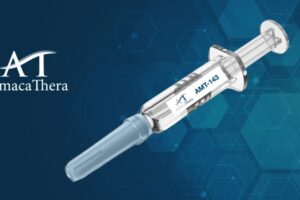
This agreement will involve the development and commercialisation of the anaesthetic intended for managing postoperative pain. The deal includes $5m upfront to AmacaThera and up to $225m in

Sativex is indicated for the enhancement of symptoms in adult patients experiencing moderate to severe spasticity due to multiple sclerosis (MS) who have not responded sufficiently to other