 Advertise With UsAdvertise on our extensive network of industry websites and newsletters.

 Get the PBR newsletterSign up to our free email to get all the latest PBR
news.
The US Food and Drug Administration (FDA) has approved Cogent Biosciences’ Ekitna (bezuclastinib) in combination with sunitinib for adult patients with advanced gastrointestinal stromal tumours (GIST) who previously received imatinib.
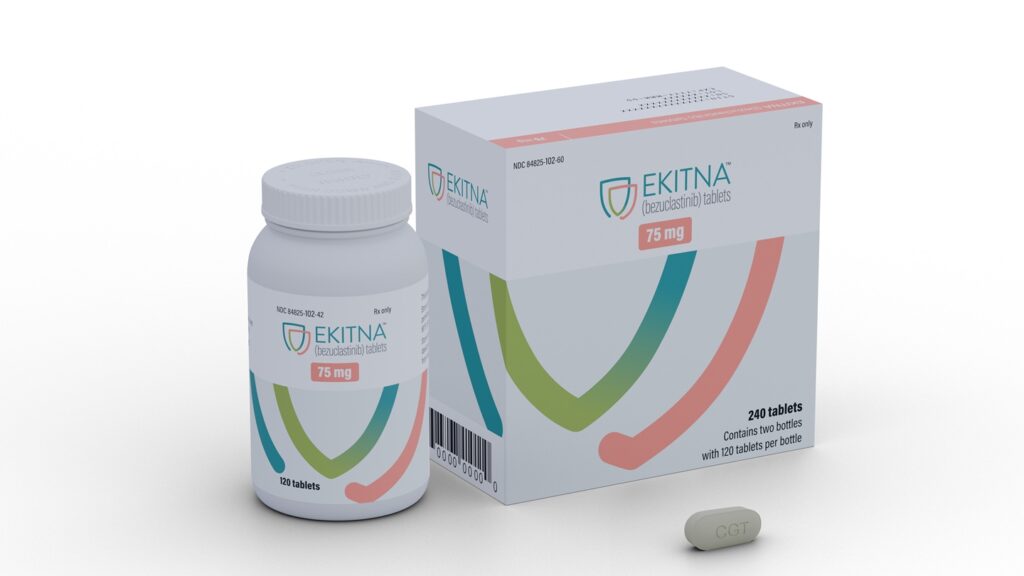
The PEAK study assessed the combination of Ekitna and sunitinib against sunitinib monotherapy in individuals with imatinib-resistant GIST. Credit: Cogent Biosciences/GlobeNewswire.
Subscribe to our email newsletter
This decision was supported by findings from the global, randomised Phase III PEAK study (NCT05208047).
The trial assessed the combination of Ekitna and sunitinib against sunitinib monotherapy in individuals with imatinib-resistant or intolerant GIST.
Data collected through the 30 September 2025 cutoff point demonstrated that the combination reduced the disease progression or death risk by 50% compared to monotherapy, yielding a hazard ratio (HR) of 0.50.
Independent central review confirmed a median progression-free survival (PFS) of 16.5 months for the combination versus 9.2 months for sunitinib alone.
Furthermore, 46% of patients receiving the combination therapy achieved an objective response, compared to 26% in the sunitinib comparator group.
Cogent Biosciences president and CEO Andrew Robbins said: “Today’s FDA approval of Ekitna marks an enormous milestone for people living with GIST and a historic milestone for Cogent.
“After seeing the incredible results of the PEAK trial, we were confident this day would come, and we are excited that it is finally here.
“On behalf of all Cogent employees, we are extremely proud to launch Ekitna, which brings new hope to GIST patients searching for better treatment options.”
Following the approval, the company has launched the therapy alongside the Cogent Connect Patient Support Program.
The support scheme aims to help patients and healthcare providers navigate access barriers.
Bezuclastinib functions as a selective tyrosine kinase inhibitor that targets the KIT D816V mutation and other alterations in KIT exon 17.
Cogent Biosciences is also developing targeted therapies directed at mutations in erythroblastic oncogene B2 (ErbB2), Janus kinase 2 (JAK2), kirsten rat sarcoma viral oncogene homolog (KRAS), and phosphoinositide 3-kinase alpha (PI3Kα).